
Triangle (2009) Ending Explained: Why Jess Goes Back
A distress call, a doorbell, and a promise hold the clues to Jess’s final choice.
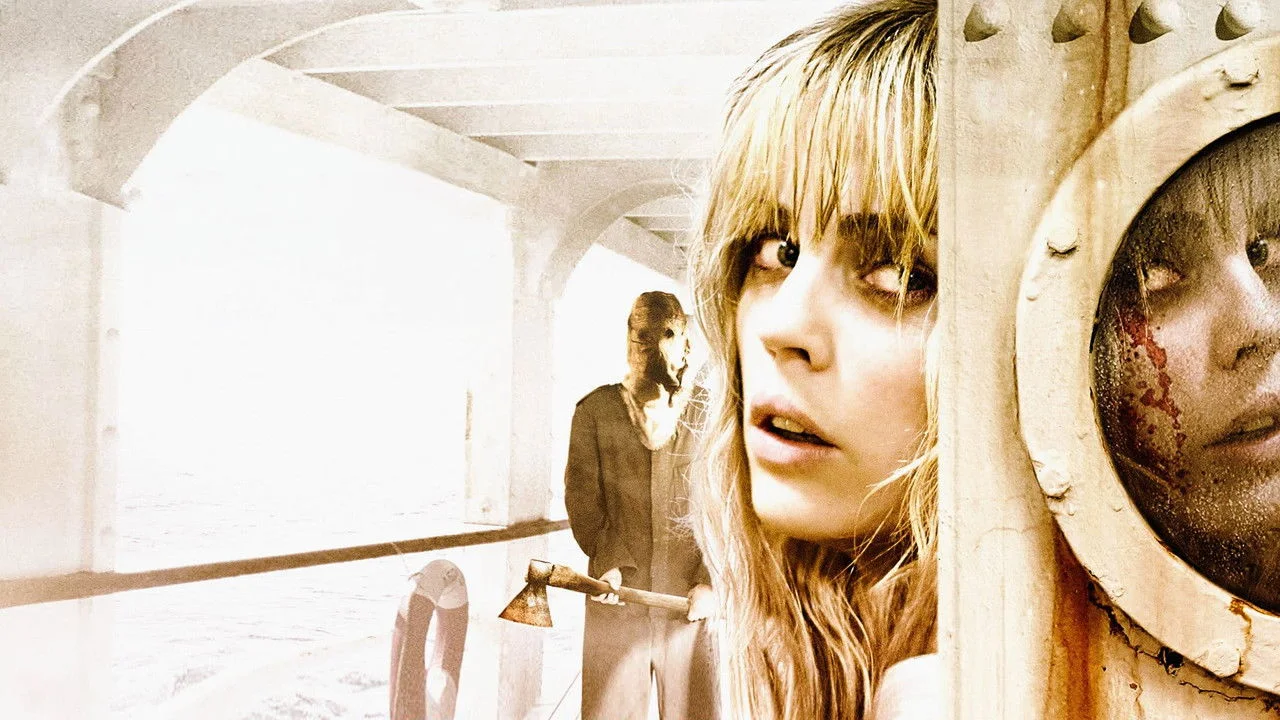
Listen to the distress call near the start of Triangle. The first time you hear it, the urgent question is whether anyone can help the caller. By the end, you can hear those same few seconds from the other end of the radio. The film asks you to do something similar with Jess’s trip to the harbor.
Why does Jess go back to the harbor?
Jess boards Greg’s yacht again because the voyage has already taken her back to a morning when her son Tommy was alive. He has just died in a car crash. From the roadside, the harbor offers her one imaginable route back to him. We have already seen where that route leads. The woman Greg welcomes aboard at the beginning is the grieving mother we leave at the end.
Jess never tells the taxi driver her plan, so her motive is an inference. What makes it persuasive is that she has good reason to believe half of it. She really did get home. She really did see Tommy alive again. The leap she makes is to believe that reaching that morning gives her the power to change what happens next.
How can Jess be both the survivor and the masked attacker?

Follow the Jess who first boards the ocean liner Aeolus. She fights off a masked attacker and knocks her overboard. Then she looks down and sees her friends calling for help from the overturned yacht, with another Jess among them. For the newcomers, boarding the liner still lies ahead. For the woman looking down, it has already happened. Both groups occupy the same ship, and only one Jess remembers the fight.
That overlap explains the distress call. Sally reaches the radio aboard the liner and sends the plea that the group heard earlier on the yacht. It also explains one of the film’s cruelest images. A wounded Sally crawls to a spot where the bodies of other Sallys already lie. A fresh group arrives, but the ship keeps the physical remains of earlier passages.
Jess eventually puts on the mask herself. She has seen another yachtload of friends appear after their counterparts die, and she comes to believe that killing the people on board will give her a way home. The masked woman’s insistence that everyone must die now has a motive. It also has a flaw: every time Jess acts on that belief, she gives the newly arrived Jess a masked killer to fight.
What the doorbell reveals about Tommy’s death
When Jess washes ashore, she reaches her house in time to see her earlier self strike Tommy. She rings the doorbell. It is the same interruption we heard near the beginning, now seen from the doorstep. Before Jess even enters the house to change the morning, her intervention is already part of the morning she remembers. /Film’s analysis traces the doorbell across both scenes.
Jess kills her earlier self and takes her place. For a moment she can imagine that Tommy now has the mother he deserves. For Tommy, the distinction offers little comfort. He has witnessed the violence, and the mother driving him away asks him to understand what he saw as a bad dream. She wants a fresh start with a child who still remembers what happened.
When a gull hits the windshield, Jess stops to dispose of it and finds a heap of dead gulls. On land, the birds serve the same purpose as Sally’s bodies at sea. Jess has stood in this spot before. The crash that follows kills Tommy, giving her the very reason she will board the yacht again.
Is the taxi driver Death?
The strongest clue is the promise. Aboard the Aeolus, the passengers discuss Sisyphus, condemned to push a stone uphill only to have it roll back down. Their conversation singles out a promise he made to Death and failed to keep. At the harbor, the driver agrees to wait, Jess promises to return, and then she walks toward Greg. The driver’s ordinary courtesy suddenly sounds like an appointment she has postponed many times. The film’s dialogue pairs the story of Sisyphus with the exchange at the harbor.
Reading the driver as Death and the voyage as a kind of purgatory fits those details. The film leaves his identity open, though, and it never shows an original accident outside the loop that would settle exactly when Jess herself died. Writer-director Christopher Smith described the ending as a riddle that also leaves room for a Bermuda Triangle reading. Read Smith’s interview with The Fan Carpet.
For Jess, the cruelest part of the Sisyphus parallel is how close she gets. She reaches the house, hears Tommy’s voice, and gets to hold him. At the harbor, giving up on the voyage would mean walking away from the only way she knows to see him again. That is what makes it so easy to understand her choice, even after we have seen what it costs him.